Dispatch support
Check calls, approved load updates, driver messages, and exception notes kept in one visible queue.
Powered by StealthAgents
Trucking and freight support
Add trained remote support for dispatch administration, billing, compliance records, load tracking, and customer communication while your team keeps operating authority.
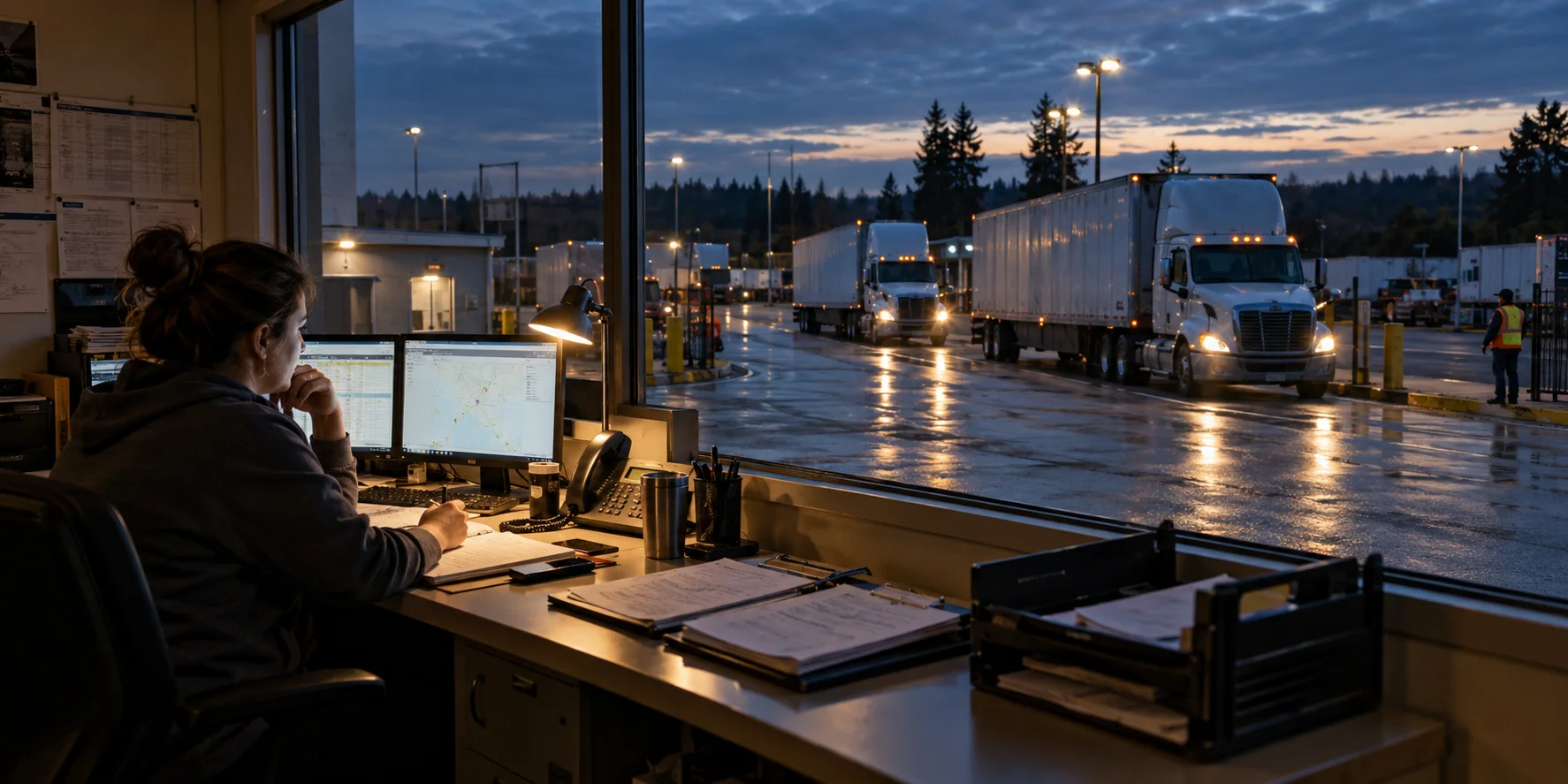
The desk behind the road
Records, calls, documents, and exceptions stay organized while drivers and operators keep moving freight.
Back-office lanes
Start with recurring work that has clear inputs and a person who owns exceptions. Expand only after the handoff is working.
Check calls, approved load updates, driver messages, and exception notes kept in one visible queue.
Carrier packets, rate confirmations, status follow-up, and document collection organized around your process.
Onboarding records, maintenance reminders, recurring reports, and follow-up prepared for the people who decide.
Expiry dates, approved files, and missing-item alerts tracked without moving regulated decisions away from your team.
Freight bills, proof-of-delivery files, factoring packets, and follow-up status kept current.
Routine updates and document requests handled with clear scripts and escalation paths.

Operating boundary
Administration moves. Authority stays.
The handoff
Define the queue, source records, allowed actions, and the owner for exceptions.
Begin with limited access, documented procedures, and a visible review cadence.
Check outputs, update the procedure, and expand only when the operating controls hold.
Control stays with your operation
Support lane
Approved system updates, routine communications, document collection, queue monitoring, record preparation, and exception notes.
Operator lane
Driving, routing, safety, load acceptance, regulated compliance, contracting, financial approvals, legal interpretation, and emergency response.
What the back office protects
Administrative support should give the operating team a more reliable view of the work, not another layer to manage. These are the outcomes the handoff is built to protect.
Recurring work is kept in an agreed system with a current status, a next action, and a named owner. Dispatchers and managers can review the operation without piecing together private messages.
Routine document requests, approved updates, and follow-up stay with the support lane. Exceptions arrive with the load, record, prior action, and decision needed already attached.
Proof-of-delivery files, invoice inputs, carrier records, and customer updates are checked against the documented process before the item leaves the active queue.
Review notes show where a procedure is unclear, an input is often missing, or an approval takes too long. Your team can refine the route using evidence from the work.
Before the first call
A useful first conversation starts with the work, systems, owners, and exceptions you already know.
A clearly scoped assistant can update approved records, coordinate routine messages, organize documents, monitor queues, prepare invoices, and flag exceptions for the right owner.
Yes, when you approve the systems, permission levels, procedures, and oversight. Access should follow your security policy and only cover the defined role.
Your qualified and authorized personnel retain driving, routing, safety, load acceptance, regulated compliance, contracting, financial, and emergency decisions.
Choose one recurring queue with clear inputs, an accountable owner, and a known escalation point. The consultation can turn that queue into a practical role outline.
Start with one queue
Tell us where recurring trucking administration is creating pressure. We will help outline a support role with practical boundaries.